Serving Richland, WA and surrounding areas. (509) 392-6617
A cracked, uneven, or missing sidewalk is a trip hazard waiting to happen. We build concrete sidewalks in Richland that sit on a solid base, drain correctly, and hold up through decades of Eastern Washington summers and hard freezes.
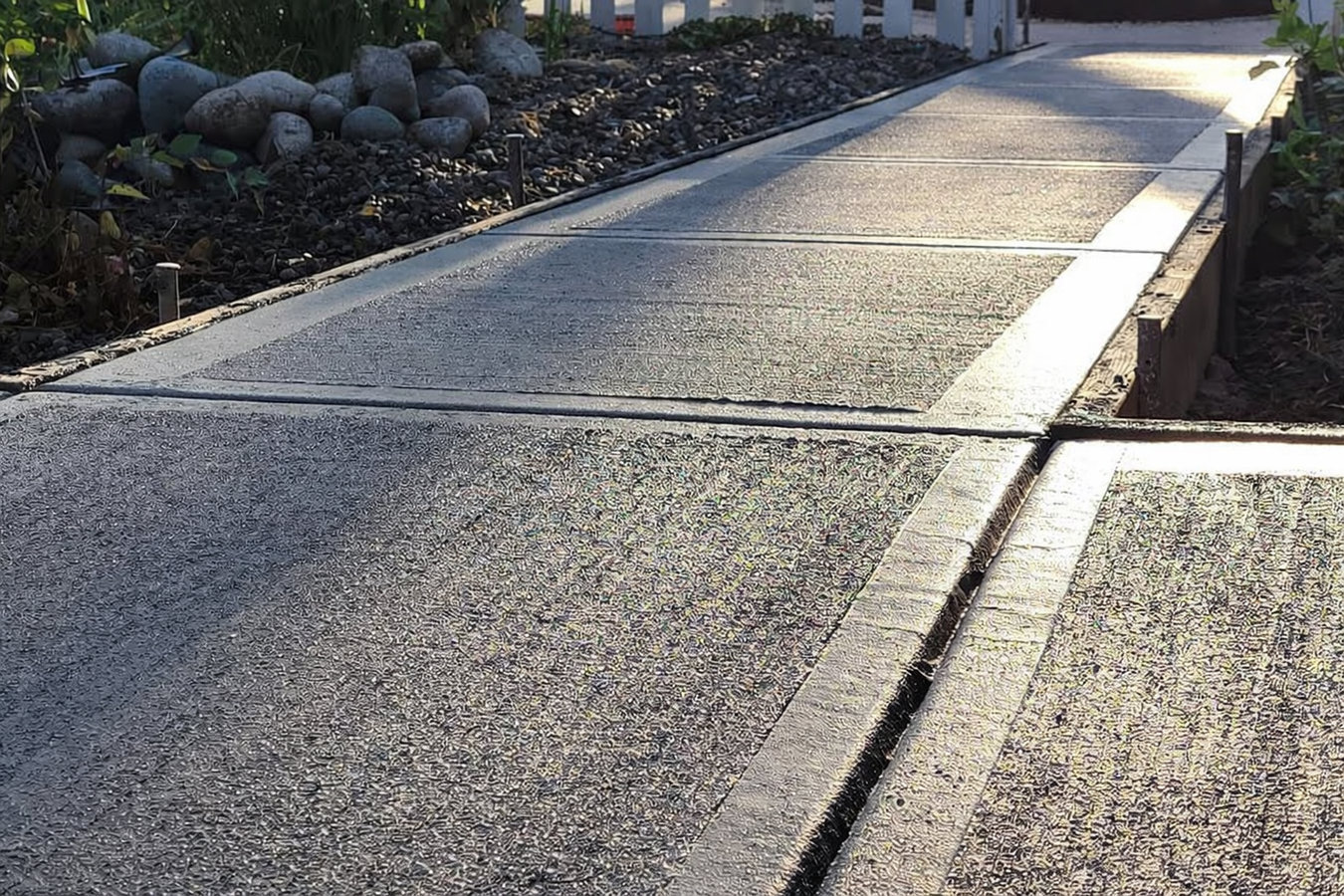
Concrete sidewalk building in Richland means removing whatever is there now, preparing and compacting the ground underneath, pouring a fresh concrete slab into framed forms, and finishing it with a broom texture for grip - most residential sidewalk projects wrap up in one to two days of active work, with the concrete ready for light foot traffic within 24 to 48 hours.
Most homeowners contact us after an existing sidewalk has started cracking, sinking, or flaking, or because there is no sidewalk connecting the driveway to the front door at all - which is common on older Richland properties built in the 1960s and 1970s. Richland's sandy, loose Columbia Basin soils mean base compaction is not optional here; skipping it is the most common reason sidewalks fail before their time. Many clients who come to us for sidewalk work also ask about concrete driveway building when we are already on site, so it is worth asking about combining projects.
If you can spot cracks from a normal standing distance, the damage has moved past cosmetic. Cracks wider than roughly a quarter-inch let water in, which makes the problem worse over time - especially through Richland's freeze-thaw winters, where water that enters a crack expands when it freezes and widens the gap further.
When one section of a sidewalk drops lower than the one next to it, you get a raised edge that catches toes and creates a trip hazard. This kind of uneven settling is common in Richland's sandier soils, where the ground beneath a slab can shift gradually over years - especially near edges where irrigation water drains.
If the top layer of your sidewalk is peeling off in thin chips or feels rough and gravelly when you walk on it, the surface has started to break down. This often happens to older sidewalks that were not finished well originally, and it accelerates once it begins - leaving a rough, abrasive surface that is hard on bare feet and shoes.
Many older Richland homes were built without a formal front sidewalk connecting the driveway to the entry. If you are stepping across grass or gravel to reach your front door, a new concrete sidewalk adds safety, curb appeal, and a clear path for guests - and it is one of the more straightforward concrete projects a crew can do.
We handle new sidewalk installation, full replacement of existing concrete walks, and partial section replacements where only part of a path has failed. Every project includes demolition of the old surface if needed, haul-away of debris, proper base compaction, forming, pouring, and a broom-finished surface that provides grip in wet conditions. Control joints are cut at planned intervals so the concrete has a designated place to flex with Richland's temperature swings - instead of cracking randomly across the surface. We also handle any permit requirements with the City of Richland, which are required for sidewalks near public right-of-way. If your sidewalk connects to a concrete driveway we are building or replacing, we can scope and schedule both together.
For homeowners who want something beyond a standard gray finish on their walkways, ask about combining sidewalk work with garage floor concrete or other flatwork on the same job. Combining projects saves on mobilization costs and keeps your property disruption to a single stretch of time. We will walk you through what makes sense for your home and budget before any work begins.
Best for homes that have no existing sidewalk and need a clear, safe path from the driveway or street to the front entry.
Suits homeowners whose existing walk is cracked, settled, or crumbling across most or all of its length and is past the point of patch repairs.
Right for homeowners where one or two sections have failed while the rest of the walk is still structurally sound - we remove and repour just what needs replacing.
Ideal for homeowners whose sidewalk connects to or crosses city-owned land - we handle the permit application with Richland Public Works so you stay compliant without the paperwork headache.
Richland sits in the Columbia Basin, a high desert region built on sandy, wind-deposited soils that can shift or compact unevenly under a concrete slab. A contractor who skips proper base compaction on these soils is setting up a sinking or cracking sidewalk within a few years, regardless of how good the concrete itself is. Extreme summer heat - temperatures regularly hitting 100 degrees or above - also means concrete poured without heat management can dry too fast and crack before it ever fully cures. Experienced local contractors schedule pours for early morning and take steps to slow the drying process. Homeowners in Pasco and Kennewick face the same soil and climate conditions, and we approach those jobs with the same local knowledge.
Permits matter here too. If your sidewalk connects to the street or runs along the front of your property near city-owned land, the City of Richland requires a permit before work begins. That permit means the work is inspected and on record, which protects you if you ever sell the home. Many newer subdivisions in Richland also have HOA guidelines about sidewalk materials or placement, so we ask about both at the start of every project - not after the concrete is already poured. Winters add one more variable: hard freezes between November and February can damage freshly poured concrete that has not fully cured, so timing your project for late spring through early fall gives you the most reliable results.
We come out, look at the area, check for roots, slopes, underground utilities, and proximity to the street. We measure everything and give you a written estimate covering demolition, base prep, the pour, and any permit fees. Most requests get a reply within one business day.
If a permit is needed - and it often is in Richland when the sidewalk touches city right-of-way - we handle the application with Richland Public Works. Any old concrete is broken up and hauled away on the first morning; then the crew compacts the base before setting the forms.
Concrete is poured, spread, and finished with a broom texture for grip. The crew cuts control joints at planned intervals so any future cracking follows straight, intentional lines rather than running randomly across the surface. A typical residential sidewalk pour wraps up in a single day.
When the job is done, we walk the finished sidewalk with you, confirm the slope is correct, and tell you exactly when it is safe for normal use. The site is cleaned up - forms removed, debris hauled away - so the only thing that has changed is you now have a solid new path.
Free estimate, no pressure. We handle the permit, the base prep, and the pour - and we clean up when we leave.
(509) 392-6617Richland's sandy, loose soils shift more than soils in denser parts of Washington, which means base compaction is not a formality here - it is the step that determines whether your sidewalk is still level in ten years. We take it seriously on every job, whether the walk is 20 feet or 200 feet long.
Sidewalk work near Richland's public right-of-way requires a permit from the city, and navigating that process on your own is confusing. We handle the application and coordinate the inspection so the work is on record with the city - which matters when you go to sell your home. Washington State also requires contractors to be registered with L&I - we are, and you can verify it.
Control joints are the planned seams that give concrete a safe place to flex and crack - along a straight, nearly invisible line rather than diagonally across the middle of a section. We cut them at every sidewalk we pour, because skipping them is one of the most common reasons concrete paths look bad within a few years.
Richland summers hit 100 degrees or above, and concrete poured in that heat without proper precautions can dry too fast and crack before it ever fully cures. We schedule pours for early morning in summer and take steps to protect the surface during curing. The Portland Cement Association outlines best practices for hot-weather placement - we follow them.
These practices are not extras - they are how we build sidewalks that still look right a decade from now. If you are ready to get started, call us or submit a request and we will come out to look at your property.
New concrete garage floors that resist oil stains, dust, and the temperature swings common in Richland's attached and detached garages.
Learn moreFull driveway replacement and widening for Richland homeowners whose existing slab is cracked, sunken, or no longer draining correctly.
Learn moreSpring and early fall are the best windows for sidewalk pours in Richland - contact us now to get on the schedule before the best dates are gone.