Serving Richland, WA and surrounding areas. (509) 392-6617
Your garage floor is cracking, flaking, or just worn out after years of use. We pour reinforced garage floor slabs in Richland built for Eastern Washington soil conditions, summer heat, and hard winter freezes - so your floor holds up for decades, not years.
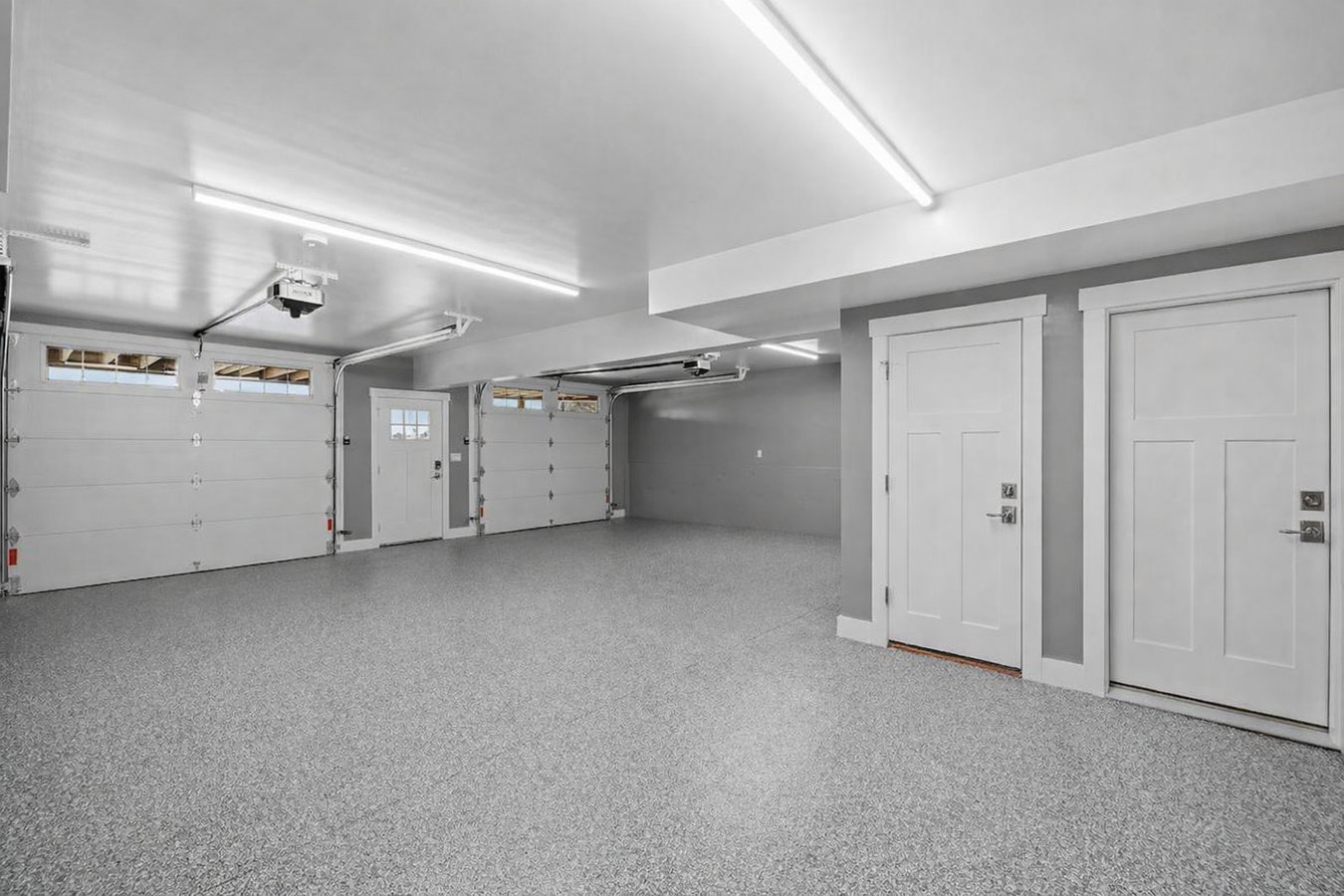
Garage floor concrete in Richland means removing the old slab if one exists, compacting the base for Eastern Washington soil conditions, pouring a reinforced four-inch slab with properly spaced control joints, and letting it cure before use - most projects run one to two weeks from permit approval to final walkthrough.
Most homeowners call us after their garage floor has started cracking, spalling, or developing low spots where water pools. Richland sits on sandy Columbia Basin soils that shift more than denser ground, which makes subgrade compaction one of the most important steps we take on every pour. If you are also considering a decorative concrete finish for the floor - such as an epoxy-ready surface or colored slab - we can plan for that from the start so the finish coat goes on correctly when the time comes.
Small hairline cracks are common and usually harmless. But if a crack has grown wider than a quarter inch, or if you notice new cracks branching off old ones, the slab is moving or the base underneath has shifted. In Richland, sandy soils and repeated freeze-thaw cycles are common culprits - and patching the surface without addressing the cause is a short-term fix at best.
If puddles form in the middle of your garage after a rainstorm or after washing your car, the floor has developed low spots and is no longer level. This is a sign the slab has settled unevenly or was not poured with the correct slope. Standing water works its way into cracks and speeds up surface breakdown, especially during Richland's winter freeze cycles.
If the top layer of your floor is peeling away in chips or flakes, the surface has started to break down - a condition called spalling. This often happens when concrete was exposed to deicing salts or was not cured correctly during the original pour. Once spalling starts, it tends to spread, and a deteriorating surface is harder to coat or seal effectively.
Many homes in Richland's established west-side neighborhoods were built in the 1970s through the 1990s, and original garage slabs from that era are reaching the end of their useful life. If your floor shows any combination of cracking, staining, and uneven surfaces, it is worth having a contractor assess it before small problems become expensive repairs.
We handle complete garage floor replacements from demolition and haul-away through subgrade compaction, formwork, pour, and finishing. Standard pours are four inches thick with welded wire reinforcement or rebar, depending on what your soil conditions and planned use require. We cut control joints into every floor to give the concrete a predictable place to flex with Richland's temperature swings rather than cracking randomly. Every project includes permit application through the City of Richland and coordination of the city inspection before closeout.
Many garage floor clients also want a decorative concrete finish applied after curing - stained, sealed, or coated - and we finish the surface appropriately for whichever coating you plan to add. If your project includes an adjacent utility room or workshop and you need concrete floor installation in a connected space, we can scope and schedule both at once.
Best for slabs that are cracking, heaving, or structurally compromised - we remove the old floor, rebuild the base, and pour a new slab to current standards.
Suits homeowners adding a new detached garage or accessory structure who need a floor poured on bare ground with correct thickness and reinforcement.
Right for homeowners who plan to park heavy trucks, RVs, or store significant equipment and need a five- or six-inch slab with rebar reinforcement.
Ideal for homeowners planning to apply an epoxy or polyurea coating later - the surface is finished to the smoothness and tolerance those coatings require.
Richland is in the high desert of Eastern Washington, where summers regularly climb above 100 degrees and winters bring hard freezes. That climate swings from one extreme to the other, and concrete that was not mixed and poured to handle those conditions will show it within a few years. In summer, extreme heat causes freshly poured concrete to dry too fast on the surface while the interior is still wet, which creates cracking and a weak finish. Experienced local contractors schedule garage floor pours for early morning and take steps to slow surface drying during the hottest months. The Portland Cement Association outlines why curing management in hot conditions directly affects long-term slab strength.
The soil under Richland is sandy and loosely packed - the legacy of ancient Columbia Basin flood deposits. That soil shifts more than the dense clay soils found in western Washington, which means subgrade compaction before the pour is not optional here. Homeowners in West Richland and Kennewick face the same soil conditions and benefit from the same careful base prep approach. A contractor who takes shortcuts on the base is setting your new floor up for early failure - regardless of how good the pour itself looks on the day it is finished.
We respond to all inquiries within one business day. Most garage floor jobs require an in-person visit to assess the existing slab condition and measure the space before we can give you an accurate written quote.
Once you approve the estimate, we apply for the City of Richland building permit before any physical work begins. Permit processing typically takes a few business days. This is also when you should start clearing the garage completely - vehicles, shelving, stored items.
The crew removes the old slab if there is one, compacts the subgrade, sets forms, and places reinforcement. The concrete truck arrives and the pour, spreading, and surface finishing typically happen in a single day - often scheduled for early morning in warmer months.
Stay off the floor for 24 hours and avoid parking on it for a full week. We coordinate the city inspection - you do not need to be present. Once the inspection passes and the floor has fully cured, we do a final walkthrough and hand you the completed project.
No obligation - we will come take a look, give you a written quote, and answer your questions. Tri-Cities crews book up fast in spring, so reaching out early gets you the schedule you want.
(509) 392-6617We pull the required City of Richland building permit before every garage floor job. Permitted work is inspected and documented, which protects you during a home sale and with your homeowner's insurance - two situations where unpermitted work creates serious problems.
Sandy Columbia Basin soils are why garage floors in this area crack and settle more than homeowners expect. We compact the subgrade and install a proper gravel base on every job - the step that out-of-area contractors most often shortchange because they are not familiar with local conditions.
In Richland's climate, the timing of the pour and the concrete mix both matter more than in moderate climates. We schedule around the weather and use mixes appropriate for the Tri-Cities freeze-thaw cycle. The American Concrete Institute sets the standards for hot and cold weather concrete practices that we follow.
Washington State requires concrete contractors to register with the Department of Labor and Industries and carry proper insurance. We are fully compliant - you can verify our registration on the L&I contractor lookup before you ever call us.
Every one of those points connects back to the same outcome: a garage floor that is built correctly from the ground up and documented to prove it. That is what protects your investment and gives you confidence the job was done right.
Upgrade your garage floor or outdoor surfaces with stamped patterns, stains, and protective sealers designed for Richland's intense sun and hard winters.
Learn moreFull concrete floor pours for interior spaces like workshops, basements, and utility rooms that need a flat, durable surface built to last.
Learn moreTri-Cities crews fill up fast once spring arrives - reaching out now means you get the start date you want and the crew that knows how to build for this climate.