Serving Richland, WA and surrounding areas. (509) 392-6617
Cracked, crumbling, or tilting front steps are a safety hazard - and Richland winters make them worse every year. We build new concrete steps that hold up through freeze-thaw cycles and give your family solid footing in every season.
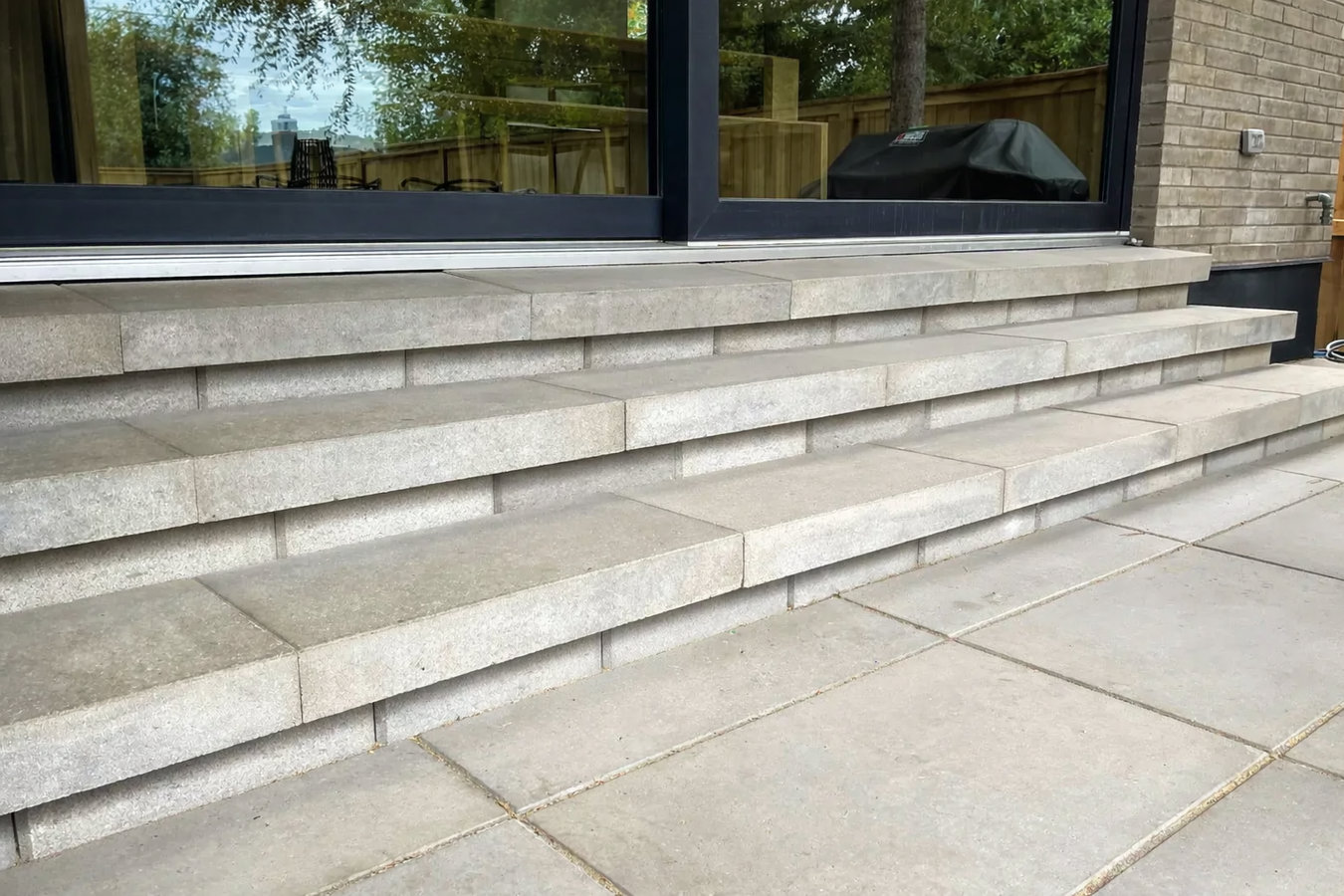
Concrete steps construction in Richland means demolishing old steps, preparing a stable base in local soil, building forms to your exact entry dimensions, pouring reinforced concrete, and finishing the surface for slip resistance - most jobs take one to two days of active work, with three to five days of curing before normal use.
Most homeowners contact us when their existing steps are cracking, flaking, tilting, or have pulled away from the foundation. Richland has a mix of housing stock - from original Hanford-era homes near downtown to newer construction in south Richland - and older steps were often built without the reinforcement or freeze-thaw-resistant mixes that hold up in this climate. If your home is more than a few decades old and the steps are original, they may be well past their useful life. Homeowners who need a full entry overhaul often combine this work with concrete retaining walls when grade changes are part of the picture.
If you can see cracks running across the top or face of your steps - especially cracks wider than a hairline - the concrete has been weakened by years of freeze-thaw cycles. In Richland, winter nights regularly drop below freezing while daytime temperatures thaw the surface, and that cycle expands existing cracks from the inside. Cracks you can fit a coin into are a sign of structural damage, not just cosmetic wear.
If the top layer of your steps is peeling away in thin chips or sheets, the concrete has started breaking down from the outside in - a process called spalling. It often happens when concrete was not mixed for a cold climate like Richland's, or was never sealed after installation. Once spalling starts, it spreads. The surface becomes uneven, rough to the touch, and harder to keep clean.
If your steps are no longer level, or if there is a visible gap between the steps and your home's foundation, the base underneath has shifted. The Tri-Cities area has areas of caliche and harder basalt-derived soils that can behave unpredictably over time, especially on older lots. A tilted or separated step is a trip hazard and will not correct itself on its own.
Tap the surface of your steps with your knuckle or heel. A solid step sounds dense and uniform. A hollow sound - or steps that flex or shift slightly when you step on them - means voids have formed underneath, often from soil washing out over time. Steps with voids under the surface need to be replaced, not patched, because the structural support is already gone.
We handle full step replacements from demolition and hauling away the old material through base excavation, formwork, pouring, and finishing. Every set of steps we build includes steel reinforcement inside the slab, a broom finish for year-round slip resistance, and a concrete mix chosen for Richland's freeze-thaw climate. If your entry includes a landing pad, a ramp, or needs to connect to a concrete retaining wall, we scope and build all of it as a single coordinated project.
For homeowners who want something beyond a plain finish, we also do stamped and textured designs that keep grip while adding visual appeal. And for properties where the overall landscape is getting a refresh, new steps work naturally alongside a slab foundation pour or a new driveway approach, letting us mobilize once and cover multiple areas in a single project window.
Best for steps that are cracked, tilting, or structurally compromised - we remove everything, rebuild the base, and pour a new set built to current standards with reinforcement and freeze-thaw-resistant mix.
Suits homeowners who want a wider, more welcoming entry or need a landing platform at the top to meet code requirements or match an existing porch design.
Ideal for homeowners who want a clean, functional entry with maximum slip resistance - the standard choice for Richland's wet and icy winter conditions.
Right for homeowners who want a more finished look at the front of their home - decorative patterns that add curb appeal while keeping the surface safe to walk on year round.
Richland sits in a high desert climate where concrete faces some of its most demanding conditions. Summer heat regularly exceeds 100 degrees, which can cause concrete poured in the middle of the day to dry too quickly and crack before it has fully set. Winter nights drop below freezing while afternoons thaw, creating the freeze-thaw cycle that breaks apart steps not built with an air-entrained, cold-weather mix. The Portland Cement Association notes that proper air entrainment is one of the most critical factors in concrete longevity in freeze-thaw climates - and it is something not all contractors pay attention to. The soils in parts of the Tri-Cities area also include caliche layers that require extra excavation to reach a stable base - if the contractor does not account for this, steps can tilt or settle within a few years. Learn more about concrete standards from the Portland Cement Association.
We build concrete steps throughout the Tri-Cities and surrounding area. Homeowners in Pasco call us for the same reason Richland homeowners do - older homes with original steps that have taken too many winters without being replaced. Homeowners in Kennewick face similar soil and climate conditions, and we bring that same local knowledge to every project across the region. Whether your home was built in the 1950s or the last decade, the right mix and base prep make the difference between steps that last one winter and steps that last thirty years.
You reach out and we respond within one business day. We ask about how many steps, how wide, and whether there are existing steps to remove. We schedule a site visit so we can see the entry in person and give you a written estimate that breaks out labor, materials, removal, and any permit fees separately.
If your steps require a permit from the City of Richland - which is likely for steps attached to your home - we handle the application before any work begins. This typically adds a few days to a week to your timeline but protects you at resale. Once the permit is ready, you get a firm start date.
The crew removes and hauls away your old steps - the loudest part of the job, typically a few hours. After demolition, we excavate and compact the ground underneath to create a stable, level base. In areas with caliche or hard soils, this step takes more time, and we confirm what is included in debris removal before we start.
Forms are set, reinforcement is placed, and concrete is poured and finished. In summer, we schedule the pour for early morning to avoid the afternoon heat. Stay off the steps for three to five days. We walk through the finished work, explain the sealing schedule, and leave you with permit and inspection records.
We respond within one business day, handle all permits, and give you a written quote with no obligation to move forward.
(509) 392-6617We use air-entrained concrete mixes specifically chosen for the freeze-thaw conditions of Eastern Washington. That air content gives the concrete small pockets to absorb expansion when water freezes inside the slab - which is the difference between steps that hold up for decades and steps that spall after three winters.
We finish every residential step project with a broom texture by default - the most effective surface for preventing slips on wet or icy mornings. The Tri-Cities area gets ice between November and March, and a slick smooth finish on your front steps is a liability. We match the texture to your entry style while keeping safety first.
We are registered with the Washington State Department of Labor and Industries and handle the full City of Richland permit process on every project that requires one. You get inspection records in hand at the end of the job - documentation that protects your investment if you ever refinance or sell.
A large share of Richland homes were built between the 1950s and 1980s - and many still have their original steps. We have worked on homes in every generation of the city's development, from alphabet-house neighborhoods near downtown to newer subdivisions in south Richland, and we know what those older entries need to be brought up to current standards.
When the base is right, the mix is right, and the finish is right for this climate, concrete steps in Richland can last 30 to 50 years with basic sealing and maintenance. We build them to go the distance.
When your entry has a grade change, concrete retaining walls work alongside steps to hold the slope and give the whole approach a finished, stable look.
Learn moreIf your project involves new construction or an addition, a poured slab foundation and entry steps can often be scheduled as one coordinated pour.
Learn moreDamaged steps get worse every winter - reach out now for a free estimate and let us get the work scheduled before the cold returns.