Serving Richland, WA and surrounding areas. (509) 392-6617
You need a solid foundation that holds up through Richland summers, hard winters, and sandy soil that shifts. We build slab foundations for homes, garages, and additions with proper permits, seismic reinforcement, and hot-weather curing methods.
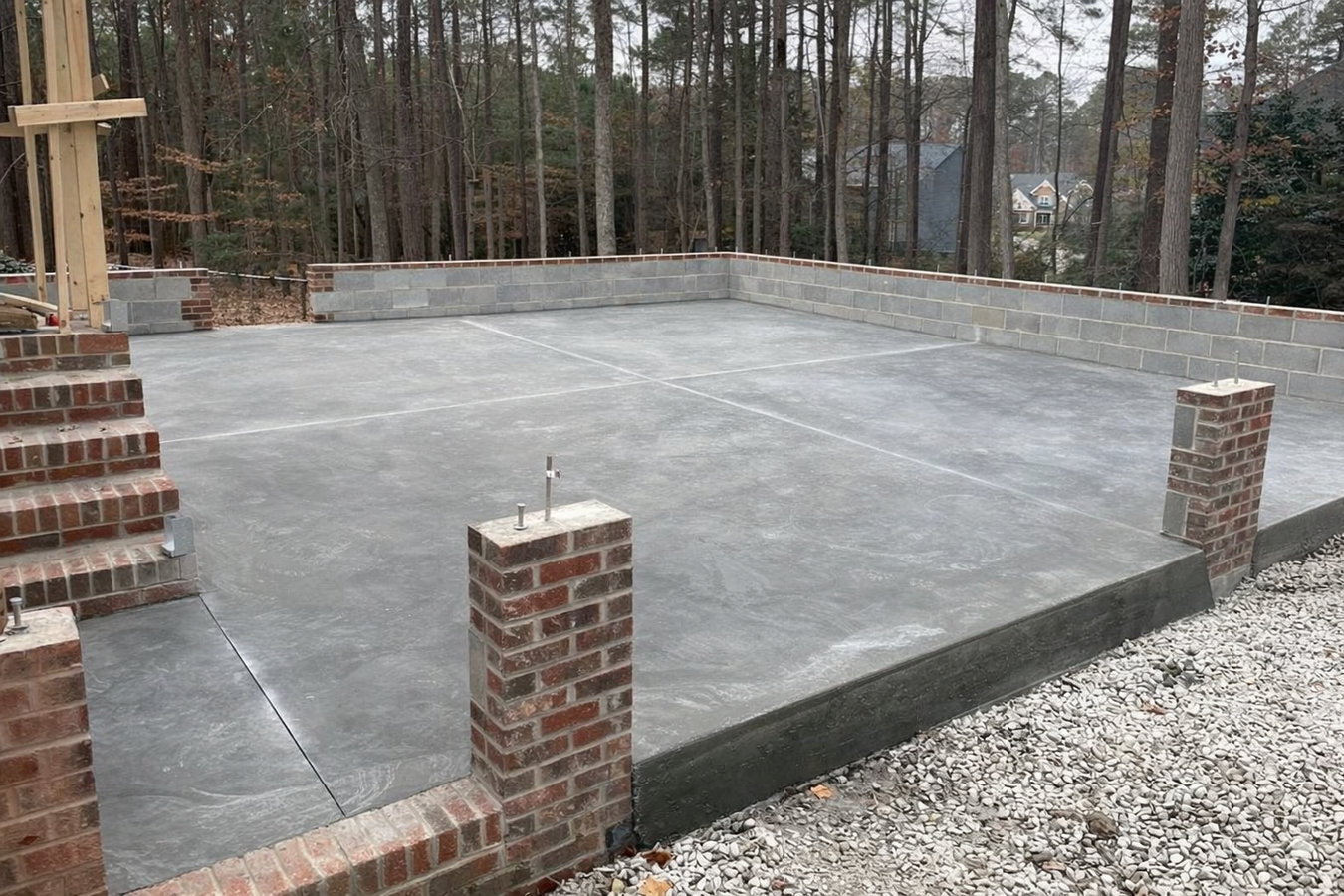
Slab foundation building in Richland means leveling and compacting the ground, laying a gravel drainage base and vapor barrier, placing steel reinforcement, and pouring concrete in a single continuous pour - most residential slabs are complete within one to three weeks from site prep through the final city inspection.
Most homeowners reaching out to us are planning a new home, detached garage, or room addition in Richland. Slab foundations are the most common choice in this area because the flat terrain and dry climate suit them well. The details that matter here - caliche soil layers, summer heat curing, and seismic anchoring requirements - are things a contractor who knows Benton County will account for from day one. Many of our slab foundation clients also ask about foundation installation options for more complex building situations.
If you are starting a new home, garage, workshop, or room addition in Richland, you need a foundation before anything else can be built. A slab is often the most practical and cost-effective starting point for the flat terrain common in most Richland neighborhoods. A contractor can assess your specific site and confirm whether a slab is the right choice for your soil and building type.
Hairline cracks are normal, but cracks wider than about a quarter inch - or sections that have shifted up or down relative to each other - mean the foundation has moved in a way that needs professional attention. In Richland, this kind of movement is sometimes triggered by soil drying out dramatically in summer and re-wetting in spring. Walk your slab perimeter and look for edges that have dropped, heaved, or separated from the wall above.
If water collects against the side of your foundation after you run sprinklers or after a rain event, the grading is directing water toward the house instead of away from it. In Richland, where residential irrigation is heavy during summer, this is a frequent cause of moisture problems that worsen over time. A contractor can determine whether the issue is grading, drainage, or the slab itself.
When a slab shifts or settles unevenly, the walls and door frames above it can rack slightly out of square, causing doors and windows to stick, bind, or no longer close properly. This is often the first sign homeowners notice because it affects daily life before any visible cracking appears. If multiple doors or windows started sticking around the same time, it is worth having a foundation professional take a look.
We build slab foundations for new homes, detached garages, workshops, room additions, and backyard accessory structures throughout Richland and the Tri-Cities area. Every job starts with a site visit to assess soil conditions, grading needs, and drainage before we touch a shovel. We handle the permit application with the City of Richland Community Development Department and coordinate every required inspection so you never have to chase paperwork. If your project also needs concrete footings for attached structures or load-bearing walls, we scope that into the same project.
For slab foundations that need extra structural support, foundation installation work - including crawl space and full basement options - is also something we handle. We use steel reinforcement and vapor barriers on every slab, and we manage hot-weather curing specifically for Richland conditions so your foundation reaches full strength without surface cracking.
Best for homeowners and builders starting new single-family construction on a prepared lot in Richland or the surrounding Tri-Cities area.
Right for homeowners adding a standalone garage, workshop, or accessory dwelling unit that needs its own properly permitted and inspected foundation.
Suits homeowners expanding their living space with a bedroom, sunroom, or covered addition that needs a new slab tied into the existing structure.
Ideal for homeowners building sheds, pool houses, or outbuildings that need a flat, solid base without the full complexity of a home foundation.
Richland sits in the Columbia Basin on a mix of sandy, silty soils and areas with caliche - a hard, calcium-rich layer that forms naturally in arid climates. Both soil types behave differently under a concrete slab, and a contractor who does not know the area may not account for what your specific lot actually needs. The seismic zone requirements for Eastern Washington also affect how steel reinforcement must be placed and how the slab connects to the walls above it - details a city inspector will check before approving the work. Getting these things right from the start is far less expensive than fixing them later. The American Concrete Institute provides current guidance on hot-weather and seismic concrete construction that applies directly to Richland conditions.
Richland summers regularly push past 100 degrees, which is a genuine risk to freshly poured concrete. When concrete dries too fast in that kind of heat, it can crack before gaining full strength - and those cracks tend to grow over time. Homeowners in West Richland and Kennewick face the same conditions, and across the Tri-Cities area, seasonal soil moisture shifts between heavy summer irrigation and drier fall conditions put repeated stress on slab edges that were not graded correctly from the start.
We respond within one business day. We schedule a visit to your property to look at the site in person - checking soil, drainage, slopes, and building plans - before giving you a written price. No firm quote without a site visit.
We handle the permit application with the City of Richland on your behalf. Approval typically takes one to two weeks. You do not need to do anything during this time - we keep you updated on the timeline.
The crew excavates, levels, and compacts the area, then brings in gravel for drainage and installs the vapor barrier and steel reinforcement inside formwork. A city inspector reviews everything before the pour - this inspection must happen before any concrete is placed.
Pour day happens in a single continuous session, typically starting early morning in Richland summers to manage heat. After the pour, we apply curing methods to protect the slab while it gains strength. A final city inspection closes out the permit and you receive documentation confirming the work was approved.
We visit your site before we quote, handle all permits, and schedule pours around Richland's heat. No surprises on price or timeline.
(509) 392-6617We do not give firm prices over the phone for foundation work. Richland soil conditions vary block to block - caliche in one yard, loose sandy fill in the next - and your price should reflect your actual site, not a regional average. A site visit is the only way to give you a number you can rely on.
Every slab foundation we build in Richland is permitted through the City of Richland and inspected at key stages before concrete is poured. We handle the paperwork so you do not have to, and when the job is done, you have documentation proving the work was done to code - which matters at sale time and for your homeowner insurance.
Pouring concrete at 105 degrees is a different job than pouring it in cooler conditions. We schedule pours for the coolest part of the day, use curing compounds or water curing to slow the drying process, and adjust our methods based on forecast temperatures. The result is a slab that cures properly and reaches full design strength - not one that stress-cracks in its first summer.
Eastern Washington sits in a seismically active region, and Richland building codes reflect that. We build every slab to local seismic standards - including specific steel placement and wall-to-slab anchor bolt requirements that a city inspector will verify. This is not optional work: it is what separates a slab that holds up under ground movement from one that does not. USGS Earthquake Hazards Program maps current seismic risk for the Pacific Northwest.
Every one of these details comes down to one thing: a slab foundation that lasts for decades without expensive repairs. When the permit is closed and the crew is gone, you should be able to move on without worrying about what is underneath.
Full foundation installation for homes and structures where a slab alone is not the right fit - including crawl space and basement options.
Learn morePoured concrete footings for load-bearing walls, deck posts, and structures that need deep, reinforced support below the frost line.
Learn moreSpring is the ideal pour window in the Tri-Cities. Contact us now to lock in your project date and get a written estimate based on your actual site.